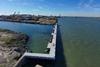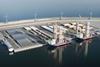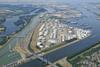




A 15-hectare terminal is to be developed at Maasvlakte 2 in the Port of Rotterdam for the Dutch Ministry of Defence. Separately, through its Rotterdam Shore Power (RSP) joint venture with Eneco, the port selected ABB to engineer and construct shore power systems at the port.
During December, 2025, the Dutch cabinet decided on the preferred locations for several additional defence installations, with the site at the port of Rotterdam earmarked for the transhipment and transit of military cargo. The beach at Maasvlakte 2 will also be used for amphibious exercise.
The North Atlantic Treaty Organization (NATO) has permitted such cargo to be transported to and from the Netherlands, even if the final destination is outside the country – with the cargo then travelling to its end point via road, rail and/or inland shipping. Because of this, a rail connection – alongside building the quay wall – will be needed at Maasvlakte 2, with the port anticipating this to take several years.
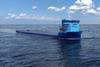
Meanwhile, in efforts to support compliance with the FuelEU Maritime regulation, RSP has contracted ABB to engineer and construct shore power systems at the port of Rotterdam – which are expected to be the largest in the world to date based on total capacity, at over 100 MVA.
Due to begin operations in the second half of 2028, ABB’s shore power systems will be able to charge up to 32 container ships simultaneously during loading and unloading operations. ABB will be tasked with commissioning and testing on site, along with designing, delivering and installing the shore power systems. According to the firm, annual CO2 emissions for the vessels calling at the three deep-sea container terminals at the port of Rotterdam can be reduced by roughly 96,000 tonnes from 2030.
In November, HLPFI reported that a 45-ha site in the northwest corner of the Maasvlakte (Arianehaven) had been selected by the Port of Rotterdam Authority for the development of an offshore wind terminal.