
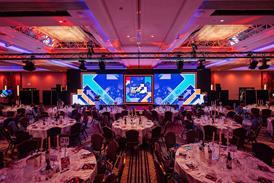
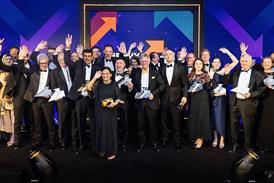
Senior representatives from nine North Sea countries gathered in Hamburg to sign a pact that commits to building 15 GW of offshore wind per year over 2031-2040 while de-risking offshore wind investments.
At the North Sea Summit in Hamburg earlier this week, representatives from Belgium, Denmark, France, Germany, Ireland, Luxembourg, the Netherlands, Norway and the UK, pledged to chart a massive offshore wind buildout for Europe.
Together with wind industry and transmission system operators (TSOs), they signed the Offshore Wind Investment Pact for the North Seas. The agreement is backed by a heads of state declaration, an energy minister declaration and an industry declaration, the latter signed by more than 100 offshore wind companies across the value chain.
Presently, Europe has 37 GW of capacity installed across 13 countries. The parties confirmed their ambition to build 300 GW of offshore wind in the North Sea by 2050.
In terms of de-risking projects, the pact includes a commitment to provide two-sided contracts for difference (CfDs) as the standard for offshore wind auction design while committing governments to remove any regulatory obstacles to power purchase agreements (PPAs).
Crucially, according to WindEurope, governments will support a coordinated and steady buildout of offshore wind across the North Sea. The aim is to deploy 15 GW of offshore wind annually between 2031-2040. This steady pipeline of projects will bring the requisite confidence to invest in new capacity for manufacturing, ports infrastructure and vessels, WindEurope added.
In return, Europe’s offshore wind industry pledges to drive down costs of offshore wind by 30 percent towards 2040 compared to 2025 levels. This cost reduction will be driven by scale effects, lower costs of capital and further industrialisation underpinned by clarity and visibility on the project pipeline. Moreover, the industry commits to mobilising EUR1 trillion (USD1.2 trillion) of economic activity for Europe.
Moreover, TSOs will identify cost-effective cooperation projects, with the aim to identify 20 GW of economically promising cross-border projects by 2027 for deployment in the 2030s.
“Today Europe doubles down on offshore wind. Government cooperation on offshore wind buildout can help crowd in EUR1 trillion of investments in the next decade. This is the best possible response to those who doubt Europe. And our drive to deliver energy that is homegrown, secure and affordable,” said WindEurope ceo Malgosia Bartosik.
The announcement was welcomed by Lisa Christie, director of public and regulatory affairs at developer Vattenfall. She said: “[The] North Sea Summit shows that the UK and Europe are serious about accelerating the energy transition and strengthening energy security. Offshore wind, including new hybrid assets that link countries and boost cross-border flexibility, will be essential to protect customers from volatile fossil fuel prices and to deliver more affordable, reliable power over time.”