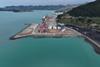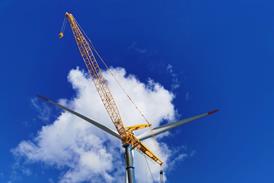
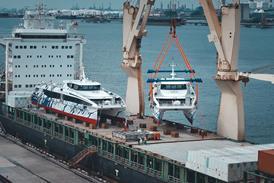
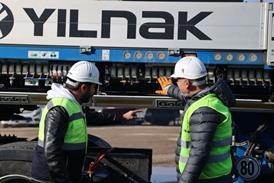
Project forwarder deugro has invested in specialised marine assets in the Middle East to strengthen its ability to execute complex projects.
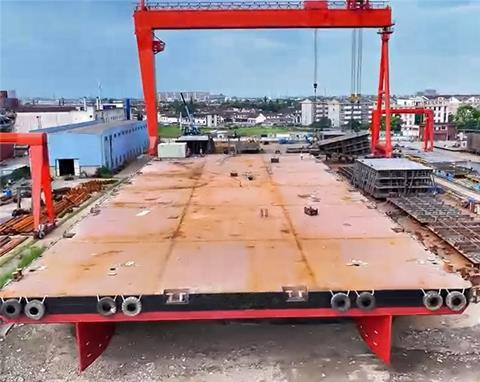
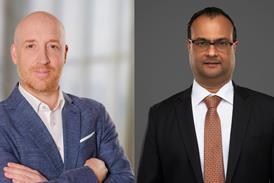
Mirko Menge, president – India, Middle East and Africa at deugro, said the marine equipment unlocks business opportunities that were previously out of reach. “These assets enable us to deliver modularised construction and heavy lift logistics for large-scale projects, including offshore developments. This capability positions us as a key differentiator in a market that increasingly favours asset-owned companies.”
deugro is increasingly engaged in modularised offshore projects, Menge added, as well as onshore projects, which “have also grown more complex due to increasing infrastructure constraints, requiring advanced civil works to ensure the successful delivery and installation of plant components”.
According to Menge, the UAE and Saudi Arabia will continue to be the strongest Gulf Cooperation Council (GCC) markets in 2026, with large-scale energy, infrastructure and construction projects.
“We have been playing a significant role in both conventional oil and gas projects as well as the rapidly expanding renewable energy sector,” Menge said. “While upstream, midstream, and downstream oil and gas activities continue to be essential, we are witnessing a marked shift toward solar, wind, green hydrogen, but also battery energy storage system (BESS) projects.”
Countries such as Oman, as an example, are moving forward with ambitious multibillion dollar hydrogen projects, although challenges remain around FDI and securing off-takers.
“The outlook appears positive, with a dual-track approach, i.e. continued investment in hydrocarbons to ensure energy security, alongside accelerated growth in renewables,” Menge continued. “Green hydrogen and solar energy will dominate the renewable landscape, supported by significant government funding and international partnerships. We anticipate that logistics and heavy lift requirements will become more sophisticated as projects scale up and timelines compress, creating opportunities for innovation and integrated logistics solutions.”
Civil infrastructure projects also remain a major source of demand for deugro, driven by rapid urbanisation, the expansion of the tourism sector, and wide-ranging economic diversification programmes.
In Saudi Arabia, for example, spending is heavily focused on preparations for major upcoming events such as the Asian Football Championships 2027, the FIFA World Cup 2034 and World Expo 2030, alongside large-scale mega-projects including NEOM, The Red Sea Project and Qiddiya. In addition, significant investment is being directed towards water infrastructure, housing, transport, and road development, all of which are key national priorities.
The UAE also continues to invest in transport and smart city infrastructure, while Oman and Qatar are active in port and industrial zone development. “These projects require extensive heavy lift and transport capabilities, particularly for modular construction and large-scale equipment,” Menge added.
Yet, he continued, “despite these diversification efforts, many projects remain tied to oil revenue cycles, creating uncertainty for long-term planning. Brent crude has dropped from USD99 in 2022 to around USD65 in 2025, putting pressure on government revenues and project financing.”
Nevertheless: “The Middle East continues to be a dynamic and resilient market with good prospects, driven by ambitious development plans, if not diversification strategies.”