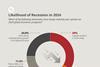




The 2026 Agility Emerging Markets Index finds that logistics executives are bracing for a year of volatility in trade, geopolitics and the global economy. 86 percent of the 502 participants surveyed said they expect increased volatility this year, when compared to 2025.
With trade, political and economic turbulence increasingly normalised, logisticians are turning to artificial intelligence (AI), scrutinising costs and reconfiguring their supply chains. Some 98 percent of respondents said their companies are using AI to manage a piece of their supply chain or operations.
The survey also shows shifts in global production and sourcing – something kicked off by the Covid pandemic, then USA-China friction, and last year by a wave of tariff increases – are continuous today as companies restructure and fine tune their supply chains.
John Manners-Bell, chief executive of Ti, which published the index alongside Agility, said the phrase that arose time again was “structural uncertainty”. He added that year’s index confirms that supply chain companies “aren’t retreating from this uncertainty but instead are engineering around it”.
The Agility Emerging Markets Index ranks the world’s 50 leading emerging markets for overall competitiveness, based on domestic and international logistics strengths, business climates and digital readiness – factors that make them attractive to logistics providers, freight forwarders, air and ocean carriers, distributors and investors.
China, India, UAE, Saudi Arabia, Malaysia, Indonesia, Qatar, Mexico, Thailand and Brazil rank 1 through 10 in the 2026 Index. Countries advancing the most are Ukraine (up 7 spots to No. 31) and Tunisia (up 4 spots to 32nd). Those falling sharply were Cambodia (down 7 to 37th); Pakistan (down 5 to 38th); and Bolivia (down 5 to 49th).
Tarek Sultan, chairman, Agility, noted that the dire predictions for the 2025 global economy did not materialise, with tariff drag offset by massive 2025 capital expenditure in AI, data centres and related infrastructure – USD400 billion alone from Amazon, Google, Microsoft and Meta.
However, better-than-expected performances in global GDP and trade have done little to reassure businesses, investors and policymakers about what they face in the near term. He cited the IMF’s World Uncertainty Index doubled from January to November, with uncertainty surging to “an exceptionally high level globally”, and it is likely here to stay.
Many are counting on AI to help them cope with the turbulence. Sultan said: “It’s obvious that AI has moved from experimental to essential in the span of two years: more than 98 percent say their companies are using AI. Weak digital infrastructure is the biggest gap in and biggest threat to supply chains, they say.”
As rapid change reshapes the global economy – from AI-driven industries to clean-energy systems – the meaning of infrastructure is expanding. Once defined by physical assets such as roads, ports and power grids, it now also encompasses the digital backbone of modern economies, including fibre networks, data centres, satellites and AI systems.