
A surge in deepsea ro-ro newbuild deliveries over the course of 2025 is reshaping fleet composition just as service patterns between Southeast Asia and Europe look set to shift.
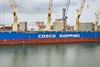
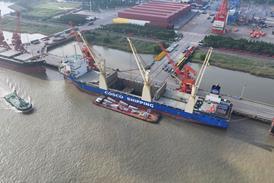
Esgian’s November 2025 ro-ro market report details the rapid increase in ro-ro capacity seen over the course of the year, with 67 new deepsea ro-ro vessels entering the market. COSCO led the way with 11 mid and high capacity newbuilds ranging from 7,000-8,600 ceu.
Several operators, including SAIC Anji, BYD, Glovis, Grimaldi and Hoegh, show a clear shift toward larger tonnage, each deploying multiple vessels in the 8,600–9,400 ceu range.
BYD and SAIC Anji, in particular, have added significant high-capacity vessels in support of expanding automotive exports. Glovis and Grimaldi, meanwhile, continue to scale their fleets with consistent 8,600–9,000 ceu units.
MOL, K-Line, Wallenius Wilhelmsen, AICC, NYK, UGR and Geely Jisu maintain more uniform mid-sized fleets in the 7,000–7,500 ceu range. Toyofuji’s two 3,000 ceo vessels, Trans Harmony Green and Trans Harmony Emerald, can operate on either diesel or LNG and are known to be deployed on the company’s Southeast Asia routes.
Esgian also provided data on service levels from Southeast Asia to Europe. It pointed out that service levels remained relatively stable between 2021 and 2023, with total sailings ranging from 207 to 212 per year. In 2024, however, total sailings declined sharply to just 147 for the full year. “This significant reduction is likely a response to geopolitical developments such as the Red Sea crisis, which has required longer routing as well as adjustments in capacity and scheduling by operators,” it explained.
It will be interesting to see how the market rebalances as the ceasefire in Gaza allows a gradual return of tonnage to the Suez Canal, coinciding with the wave of capacity additions outlined above.
Japanese carriers dominate the route presently, with NYK leading in sailings. However, the analyst expects that to change; the Southeast Asian automotive market is evolving rapidly, with Chinese and South Korean OEMs expanding their regional production footprint. Growth in EV manufacturing and the battery supply chain, combined with rising vehicle sales, is driving increased captive or integrated shipping operations.
Esgian said COSCO, SAIC Anji, and BYD are growing their respective footprints and expected to increase their sailings and overall activity on this route going forward.